
Exploring ancient stone circles on the Orkney Isles
An archipelago shaped by stone
Orkney lies about ten miles off the north coast of mainland Scotland, where the North Sea meets the Atlantic. It is not one island but around seventy, of which roughly twenty are inhabited, linked by causeways and short ferries. Much of the bedrock is Old Red Sandstone, a rock that splits obligingly into flat flagstones — the same material that made the islands so easy to build with five thousand years ago.
Between roughly 3500 and 2500 BC, Orkney held one of the densest concentrations of Neolithic monuments in Europe: chambered tombs, settlements, and great circles of standing stones. The heart of this landscape, around the lochs of Stenness and Harray, is recognised as a World Heritage Site. If you come for one thing, come for the stone circles — but give yourself time for the rest of it too.
The great circles: Stenness and Brodgar
The Stones of Stenness stand close to the shore of the Loch of Stenness, on a low promontory ringed by a henge bank and ditch. The circle itself is small — about twelve metres across — and only four stones remain upright, though at six metres the tallest of them is a genuine giant. Raised around 3100 BC, this is among the earliest henge monuments in Britain, and it feels older and stranger than its more famous neighbour. Nearby, a single monolith known as the Watch Stone marks the route between the two lochs.
The Ring of Brodgar is the showstopper: 104 metres across, making it one of the widest stone circles in Britain and Ireland, with a henge ditch cut deep into solid bedrock. Around sixty stones were originally raised; thirty-six survive, of which twenty-seven are still standing. It sits on a narrow neck of land between the Loch of Harray and the Loch of Stenness, with water visible on both sides and the hills of Hoy looming to the south.
The two sites are linked by a waymarked path, a walk of about twenty minutes, and the stretch of ground between them — including the Ness of Brodgar, where excavation has revealed a complex of monumental buildings — is worth lingering over. Summer open days at the dig are advertised locally; check on arrival, as access changes year to year.
Beyond the circles: tombs, villages and island cairns
- Maeshowe — a chambered tomb with a corbelled roof and a narrow entrance passage aligned so that the midwinter sun shines straight down it. Viking visitors left runic graffiti on the walls. Entry is by guided tour only and numbers are limited, so book well ahead.
- Skara Brae — a stone village on the west coast of Mainland, occupied from around 3180 BC, with houses, hearths and dressers still standing. It is a short drive from Brodgar and pairs naturally with a day at the circles.
- Barnhouse — a Neolithic settlement beside the Stones of Stenness, with the remains of a large late building. Easy to miss, quietly impressive.
- Cuween Hill and Unstan — smaller chambered cairns near Finstown and Stenness respectively. Cuween has a low entrance and a very dark interior; you will be crawling, and you will need a torch.
- Rousay — a short ferry from Tingwall, this island has a remarkable cluster of cairns at Midhowe, Taversoe Tuick, Blackhammer and Yarso. A full day out, and rarely crowded.
Getting there and getting around
Ferries run from Scrabster to Stromness in about ninety minutes, from Gills Bay to St Margaret's Hope in around an hour, and overnight from Aberdeen to Kirkwall. Flights connect Kirkwall with Inverness, Aberdeen, Edinburgh and Glasgow on short hops that can be weather-dependent.
Once you are on the islands, a car gives you the most freedom. Roads are quiet, often single-track with passing places, and fuel up in Kirkwall or Stromness before heading into the quieter parishes. Buses link Kirkwall, Stromness and the Stenness area in summer, but services are infrequent and a missed one can mean a long wait. Distances are modest: Stromness to the Ring of Brodgar is roughly five miles, Kirkwall about ten. Cycling works well on calm days, less so in a westerly gale.
When to go, and what to pack
Late spring and early summer bring wildflowers, seabirds and extraordinary light — around the solstice there is scarcely any true darkness. September is quieter, with golden evenings and fewer visitors. Winter suits the determined: the Maeshowe solstice tours are ticketed by ballot months in advance, and days are short but dramatic.
Pack layers rather than a single heavy coat, a proper waterproof shell, and sturdy boots, because grass paths stay wet and boggy ground is common. Add midge repellent for still summer evenings, sun cream for the days that surprise you, and a small torch for any tomb you plan to enter. Wind is the constant; a hat that stays on is worth more than a stylish one.
Visiting with care
- Stay on the marked paths. The grass around the stones is thin and easily eroded, and once lost it does not recover quickly.
- Do not climb, lean on, or move any stone. Several have already fallen or been damaged over the centuries.
- Leave no offerings — no candles, ribbons, crystals or coins. They can harm the archaeology and are removed by site staff.
- Drones are generally not permitted at the main monuments without prior permission. Ask before you launch.
- Keep dogs on leads near livestock and outside chambered tombs; do not take them inside.
- In tombs, keep voices low, follow any timed entry arrangements, and turn back if a crawl entrance feels wrong for you. Some passages are genuinely tight.
- Many sites sit on working farmland. Park considerately, use gates, and leave them as you found them.
These monuments have survived five millennia of Orkney weather and are still standing largely because generations of visitors treated them well. Arrive early or late in the day if you can, when the light is low and the crowds have gone, and you will understand why people have been drawn back to this landscape for so long.
tag: Heritage Sites

Harriet Penrose Author
Discover the history of British lighthouse keepers, from isolated rock towers to automated lights, and the stories of those who lived there.
YOU MAY ALSO LIKE
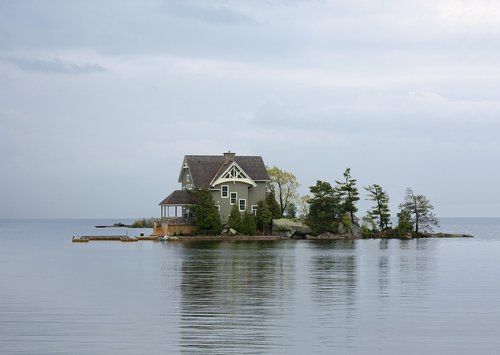
A history of British lighthouse keepers
Jun 21
10Trace island ancestry in the Hebrides using local records, graveyard visits and oral histories to connect with Scottish island roots.
read more
Tracing island ancestry in the Hebrides
Jun 15
10Discover how to plan your first trip to Arran, with advice on ferries, local buses, coastal walks and where to find a warm welcome.
read moreIsland Guides
-

ERRIC CATONA
Explore the Scottish Isles without overspending by choosing foot passenger ferries, hostel stays and simple self-catering options that suit slower travel.
May 19, 2016 at 5.12 pm
Reply
ERRIC CATONA
Plan a memorable day trip to Lindisfarne by checking tide tables, catching the causeway bus and allowing time for the priory and castle.
May 19, 2016 at 5.12 pm
Reply -
ERRIC CATONA
Follow favourite routes along the Isle of Wight coast, from gentle clifftop paths to sandy bays, with tips for buses and cafés.
May 19, 2016 at 5.12 pm
Reply
Coastal Walks
Your email address will not be published.